


The 15th edition of ‘Soccer Aid’ will be held on May 31, with more than £120 million raised for UNICEF since the charity football match began in 2006; back in 1986, ‘Sport Aid’ featured all-star exhibitions in various sports in the year after the ‘Live Aid’ concerts, including ‘The Race Against Time’ which saw an estimated 20 million people run worldwide; here, Philip Barker looks back on the event…

On Sunday, the London Stadium will host the 20th year of “Soccer Aid” supporting the United Nations Children’s Fund (UNICEF).
The match is to be shown live on ITV and is billed as “the world’s biggest celebrity football match.”
Exactly 40 years ago, the BBC also cleared their Sunday sports schedule to cover an event supported by UNICEF. Organisers claimed it was potentially bigger than the Olympics or the World Cup.
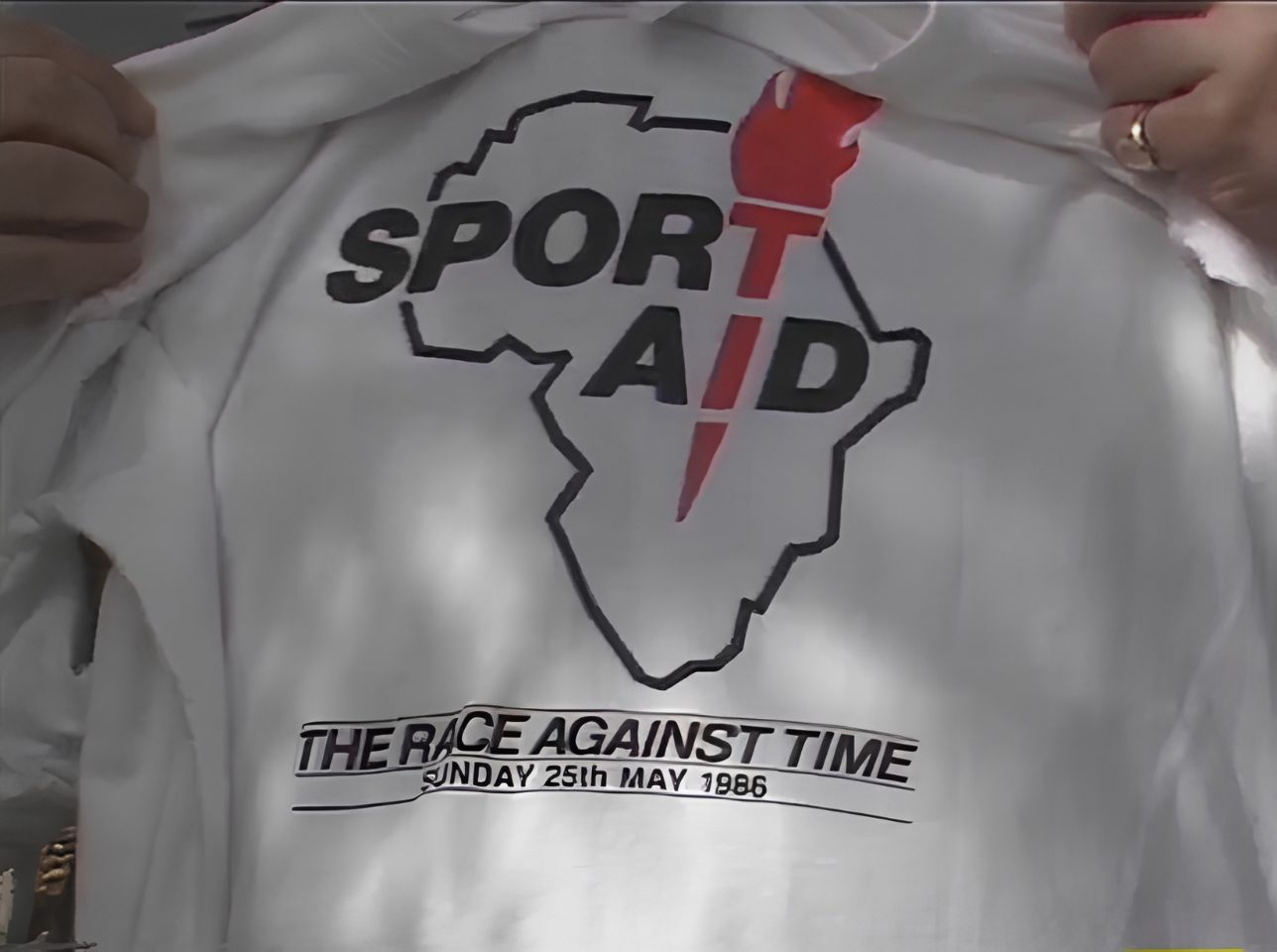
It was called “The Race Against Time”, the culmination of “Sport Aid”, a series of events in aid of famine relief, organised by Bob Geldof and Chris Long, a marketing specialist and environmentalist.
In 1984, Michael Buerk’s brilliant but harrowing BBC News television report on the famine in Ethiopia had shocked millions.
“Dawn, and as the sun breaks through the piercing chill of night on the plain outside Korem, it lights up a biblical famine,” Buerk’s report began.
Geldof was deeply affected by what he saw. With Midge Ure, he wrote “Do They Know It’s Christmas?” sung by a who’s who of British pop performing as “Band Aid”.
In the following summer of 1985 came “Live Aid”, monumental concerts at Wembley and the JFK Stadium in Philadelphia. Sport Aid came in the summer of 1986.
Incredible this was #SportAid 40 years ago today, these are from Hyde Park in but other events took place in around 300 cities.Big screens not quite as sophisticated in those days. pic.twitter.com/X9CGruxVoR
— Philip Barker (@pbarkersport) May 25, 2026
“It’s one thing to ask people to watch a pop concert, it’s another thing to ask people to get out and run. You can affect the world you live in,” said Geldof.
Sudanese Olympic runner Omar Khalifa lit a torch at the El Moweilih relief camp to begin the “Race”.
As he flew from Khartoum to Europe, he was greeted by Pope John Paul II in Rome. He also met politicians, among them British Prime Minister Margaret Thatcher.
There was also an audience at Buckingham Palace with the Prince of Wales and Diana, Princess of Wales.
Tears for Fears reworked their hit “Everybody Wants to Rule the World” with one significant change to the lyrics. The promotional video featured Geldof, Frank Bruno, Olympic javelin champion Tessa Sanderson, swimmer Duncan Goodhew, England’s 1986 World Cup squad, and cameos from Carl Lewis and Sir Peter Ustinov.
In Cardiff, New Zealand, playing as “Korus” won an international sevens rugby tournament.
Birmingham, bidding for the Olympics, was the hub for other events.
“It is appropriate during Birmingham’s bid to demonstrate the global impact of the sporting heart of Britain,” said National Exhibition Centre (NEC) chief executive Terry Golding.
ITV screened Sport Aid gymnastics and the Skate Electric gala at the NEC. 1984 Olympic ice dance champions Jayne Torvill and Christopher Dean performed a specially choreographed routine to “The Shepherd’s Song,” sung by Dame Kiri te Kanawa and, of course, their signature “Bolero”.
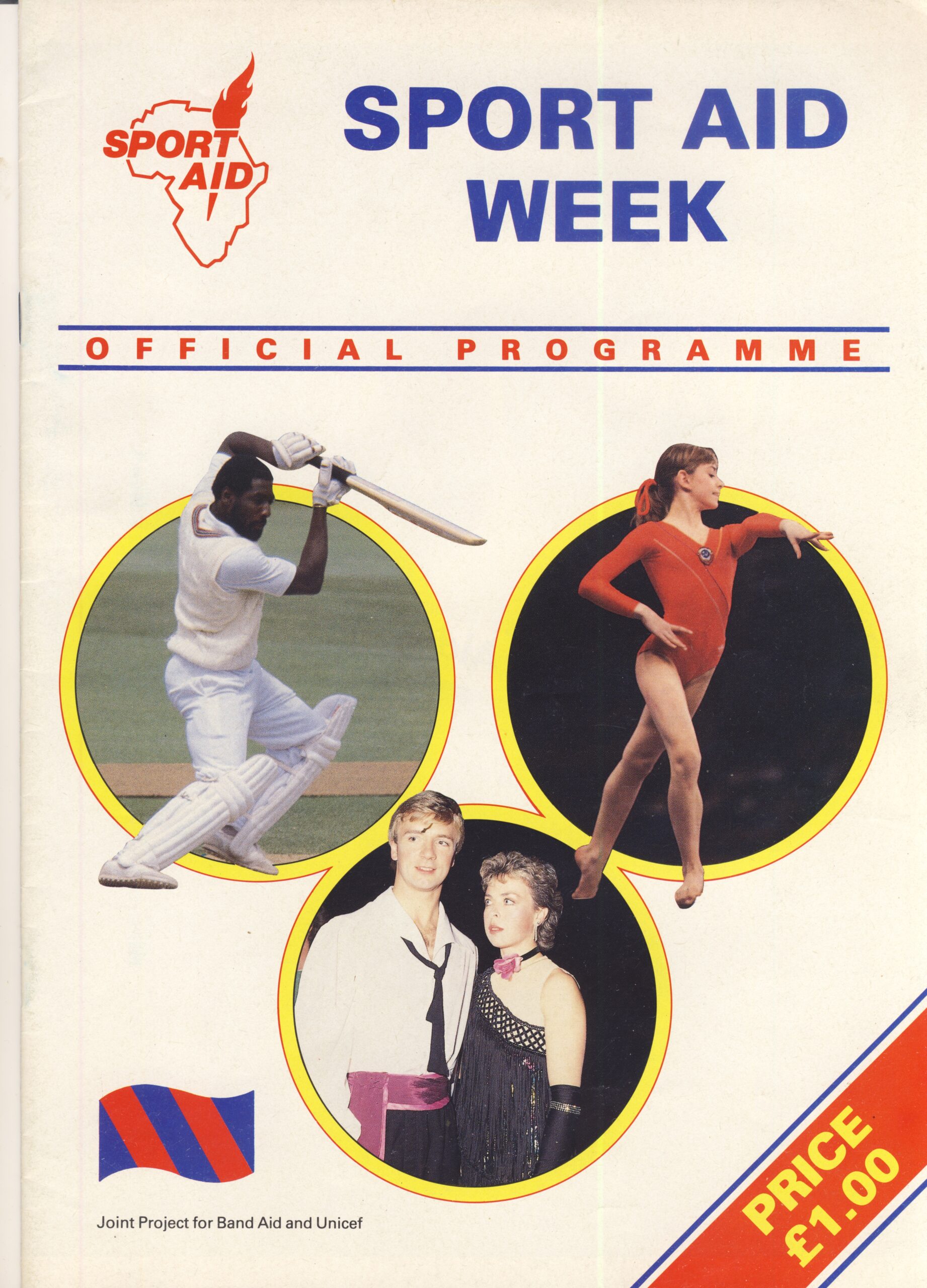
“When Band Aid started, we telephoned to say if there was anything we were able to be involved with, we’d like to and then we heard about Sport Aid and they asked us to be part of it,” they told ITV skating commentator Simon Reed.
At Edgbaston, heavy rain ruined the Sport Aid Cricket Match. West Indies were 78 for one against a star-studded Rest of the World XI when play was abandoned after only 13.3 overs.
By the end of the week, the rain had stopped as BBC athletics commentator Ron Pickering and presenter Desmond Lynam described the scenes in Hyde Park, where Cliff Richard joined a mass workout, choreographed by Arlene Phillips and repeated elsewhere in the country.
“We need to show that sport can be giving as well as on the receiving end. This is going to be a great day for sport,” said Pickering.
All eyes then turned to the big screen beaming pictures from New York. It was just about possible to make out Khalifa, making his way through Central Park, although the image was far from clear.
Soon he was approaching the UN building to light an Olympic style cauldron.
“The man who carried the Flame out of the deserts of the Sudan and ran with such dignity and such pride, represents what Africa could be if it was given half a chance,” Geldof said, as he gave the starting signal with the words, “Change the World!”
In Hyde Park, it took quite a while for those at the back of the field to even pass the starting line. An estimated 20 million ran worldwide in 300 cities across 78 countries.
At Dartmoor, a prisoner serving time for armed robbery was photographed in the “Run the World” T-shirt, with a warder close behind. It made the front page of The Times.

Television pictures showed Athens, Barcelona, Budapest, Paris and Rome. In Brisbane and Auckland, they ran in the middle of the night. Ouagadougou, capital of Burkina Faso, offered another memorable image. A greater proportion of the overall population ran there than anywhere else.
“They Ran for Dear Life” was the headline in The Times.
The event was timed to concentrate the minds of a UN “Special Session on the critical economic situation in Africa,” scheduled for the following day, or as The Guardian had it, “Joggers of the UN’s conscience”.
“Let’s hope they pay attention to the blistered feet of 20 million people who will be joining us,” Geldof said.
In the final analysis, the whole thing was believed to have raised about £27 million.
The only sour note came in the United States. Although the Flame was lit in New York, only 4,000 ran there. This was because a “Hands Across America” domestic fundraising event was held at precisely the same time.
The late Nick Cater, Sport Aid’s media chief and a former journalist with The Guardian, reflected sadly: “America has demonstrated it is the largest island in the world.”
The SJA is interested in your sports media industry news and views. Keen to reach an engaged audience, including over 70,000 followers across social media? We welcome your enquiries – contact us here. We also offer advertising and sponsorship opportunities.
For information on how to apply as a Full or Associate Member of the SJA, plus details of our free-to-enter SJA Academy, click here.